


Research groups
Collaborators
-
Patrik Rorsman
Professor of Diabetic Medicine
-
Jakob Knudsen
Novo Nordisk Postdoctoral Research Fellow (2015-2019)
-
David Hodson
Robert Turner Professor of Diabetic Medicine and Director (interim) of The Bukhman Centre for Research Excellence in Type 1 Diabetes

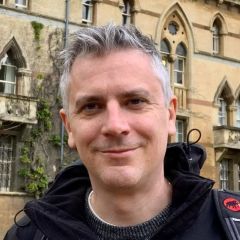
Benoit Hastoy
PhD
Diabetes UK RD Lawrence Research Fellow; Scientific Director of the Centre for Artificial Intelligence in Precision Medicine (CAIPM)
I am a Principal Investigator at the Oxford Centre for Diabetes Endocrinology and Metabolism (OCDEM) and currently hold a Diabetes UK R.D Lawrence Fellowship. Additionally, I serve as the Scientific Director of the Centre for Artificial Intelligence in Precision Medicine (CAIPM). My research focuses on investigating how genetic variants associated with Type 2 Diabetes (T2D) risk affect the secretory capacity of pancreatic beta-cells. Through collaborations within CAIPM, we are working to develop small molecules that can potentially restore beta cell function. I am fortunate to lead a small but dedicated research team with Miss Sameena Nawaz (Research Assistant) and Dr Samuel Acreman (Postdoctoral Research Assistant).
Type 2 Diabetes (T2D) is a complex disease involving the interaction between genetic and lifestyle factors. In T2D, β-cells do not secrete correct amount of insulin to reduce high blood-sugar levels after a meal. This defect can originate from the inability of β-cells to sense high blood sugar levels but also from their inability to deliver insulin. My fellowship focuses on the latter and the aim of my work is to identify the regulatory mechanisms supported by genes that are associated with T2D-risk. For this I use extensively the human beta cell line EndoC-βH1, and human primary islets when available.
Background: I started as a PhD student in Professor Jochen Lang's group in Bordeaux in 2008. My project was on the molecular mechanisms promoting exocytosis of insulin; more precisely, on the specific role of the transmembrane domain of the SNARE VAMP2 protein. I was also able to broaden my knowledge by interacting closely with researchers from different scientific backgrounds (biophysicians, bioinformaticians). In 2012, I moved to Oxford and joined Professor Patrik Rorsman's team for my first postdoctoral position. There, I learnt electrophysiology and broadened my skills on live cell imaging (i.e. calcium imaging). While involved in several collaborations, I characterised using electrophysiology the human beta-cell lines EndoC-betah1/-betah2. During this time, I also investigated the impact of T2D associated genes such as SOX4 on exocytosis. In January 2015, I joined Professors Anna Gloyn's and Mark McCarthy's teams as a postdoctoral researcher working on an MRC Experimental Challenge Grant (DIVA) awarded to Professors McCarthy, Gloyn, Karpe and Rorsman. As a member of the DIVA consortium, I investigated the cellular physiology that underlies genetic predisposition for diabetes such as those associated with PAM and SLC30A8 genes.