
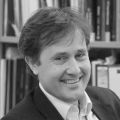
A month into the job of Academic Lead for Innovation for the Medical Sciences Division...minus a week of mince pies and presents...so make that three weeks into the job...and after a series of conversations across the University, what have I learnt?

The Medical Sciences Division (MSD) is huge. Sixteen departments across 70+ buildings. Half a billion pounds of research income every year. Over 10,000 students and staff. The largest generator of innovation through translational funding, patents and spin outs in the University...and arguably of any academic division of a university in the UK.
The actual generator of this innovation is an astonishing bunch of entrepreneur role models across MSD, including the Radcliffe Department of Medicine. These women and men have shown it is possible to develop tangible innovations from their research, which can impact society, while remaining dedicated to a University career.
I know this because I have been one of those people. The lived experience of spinning out Ultromics from the University, being responsible for signing off multi-million dollar deals to make things happen, and then seeing the innovation that has been created being used in hospitals is hugely motivational. It is one of the reasons I took on this role, to go back to the start and see what more we could do across MSD.
And the reason I am convinced more could be done is because I have met dedicated, very high calibre teams of University people who are ready to guide innovative ideas from conceptualisation, through IP filing, to securing translational research funding. They even help with business building, and identification of partnership or spin out opportunities...then continue to support you post-spin out with laboratory space and follow-on funding ideas. But a lot of researchers never start a conversation with them...or have not yet realised they exist.
Talking of things you did not realise existed, there are a lot of committees in the University that I had never heard of...all referred to by an opaque acronym! But they are making critical strategic decisions about how money flows and how things happen in MSD and the wider University.
And they do make exciting things happen, both within Oxford and the Oxfordshire ecosystem. For example, there are huge investments, from all sorts of stakeholders, promoting regional development, including a government-backed growth corridor, with a £110 billion economy spreading across to Cambridge. How our research impacts economic growth is front and centre of what the government and – importantly – the people who fund our research want to know.
And that bit about funders is key. A main takeaway for me at this early stage of my listening to people is that some researchers talk about innovation as if it is an 'add on' or 'nice thing to do'...one day. In reality, strategic thinkers are saying innovation needs to be 'core business' for any research group. Even for curiosity-driven research, someone in the group, department or local environment, needs to be imagining what could be done with new discoveries. Our research succeeds when something starts to be done differently...whether that is how healthcare is delivered, diseases are treated or society is run.
Of course, this role means I am doing some things differently now. I am still writing grants and papers, building collaborations, and giving talks around the latest new idea that our Preventive Cardiology Research Group has come up with, and managing a busy Cardiology Clinic. However, alongside the day-to-day life of a clinical academic, my diary has filled with new one-on-one stakeholder meetings, entrepreneur events...and committee meetings (complete with opaque acronyms). Hopefully, I can tap into my 'lived experience' of innovation during these meetings to help MSD, and its departments, identify and drive better ways to operate and grow innovation within the University and wider ecosystem. More to follow...
What to read next
Facilitating entrepreneurship in RDM
5 February 2025
Professor Simon Davis, RDM's Entrepreneurship Lead, reflects on his role and shares some plans.